
Guest Post: Dwolla's Impact
Diana Wright's ode to the company and my commentary about the community it built

I am traveling for two more weeks and honored to be able to share guest posts during this hiatus. Today’s is a post by my fellow Iowa Writers and Songwriters Collaborative author and Iowa Startup Collective leader, Diana Wright. Her original post, written from the perspective of a startup community leader and a past employee of the company celebrates the impacts of outsized risks. I’m sharing her full post below, followed by my own reflections on what Dwolla meant to Iowa’s startup culture.
Dwolla became the flag-bearer for the nascent startup community in 2009 through leaders who didn’t just build a new payments platform to disrupt the expensive credit card payment monopoly, but did it in the public view, sharing wins, losses, spirit and energy through community meetups. Ben Milne, the effervescent, present, and brutally honest CEO was more than the company’s leader, he became a community champion. The team of independent thinkers and builders he assembled has amplified their collective impact.

Although Dwolla’s product may have been just a hair too early, or perhaps free platforms such as Venmo were more palatable to America, Dwolla pivoted to B2B payments and, over time, became what is often referred to as payment rails, the underlying picks and shovels that make payment networks possible. Teams shrunk, experiments succeeded and failed, leadership changed, engineering shifted, and business customers replaced individual users. Dwolla persisted in downtown Des Moines despite attracting venture capital from both coasts from individual investors and storied VC firms such as Andreesen Horowitz and Union Square Ventures.
Dwolla also built more than a payments platform by inspiring a generation of Iowa founders, an outcome of successful startups I set out to uncover on this Substack. Diana Wright’s post lists the remarkable impact on the community but I’d like to share a non-exhaustive list of diverse startups created by the diaspora.
Workhound: Max Farrell and Andrew Kirpalani recognized a need in the trucking industry to better engage drivers for employment stability and built a Des Moines & Chattanooga company that was subsequently acquired. They both continue to invest in new, young companies.
Hummingbirds: Recognizing an opportunity to enable creative micro-influencers to help grow and support small business communitie, this Des Moines company now boasts coast to coast coverage .
Brale: Ben completed his tenure at Dwolla but didn’t stop with payment rails. He helped birth Basis Theory and is now CEO of Brale, another picks & shovels company providing the infrastructure for banks to issue and support tokenized assets such as stablecoins.
Dwolla was acquired last week after a 16-year run. Sixteen years is a lifetime in startup-land where companies attempt to find a successful business model quickly, pivot as necessary, and either disappear or find a strategic buyer in 7-10 years from birth. Several strategic acquisitions by huge corporates have disappeared over time, either absorbed masterfully into their corporate parents or euthanized in culture clashes.
Dwolla’s acquisition by a mid-size buyer gives me hope that the rails produced by the dozens of passionate engineers, builders, funders, and supporters will have an active life ahead. We may never see the Dwolla API on our apps or screens again but are certain to live on as parts of payment networks.
I hope you enjoy Diana’s lived personal experience in her ode below and subscribe to her two Substack publications to keep your finger on the pulse of Iowa startups.
Beyond moving money: Dwolla’s outsized impact
by Diana Wright
The darling startup of Des Moines, Dwolla, sold this week to payment platform, NMI (headquartered in Schaumburg, IL, valued at $2B).
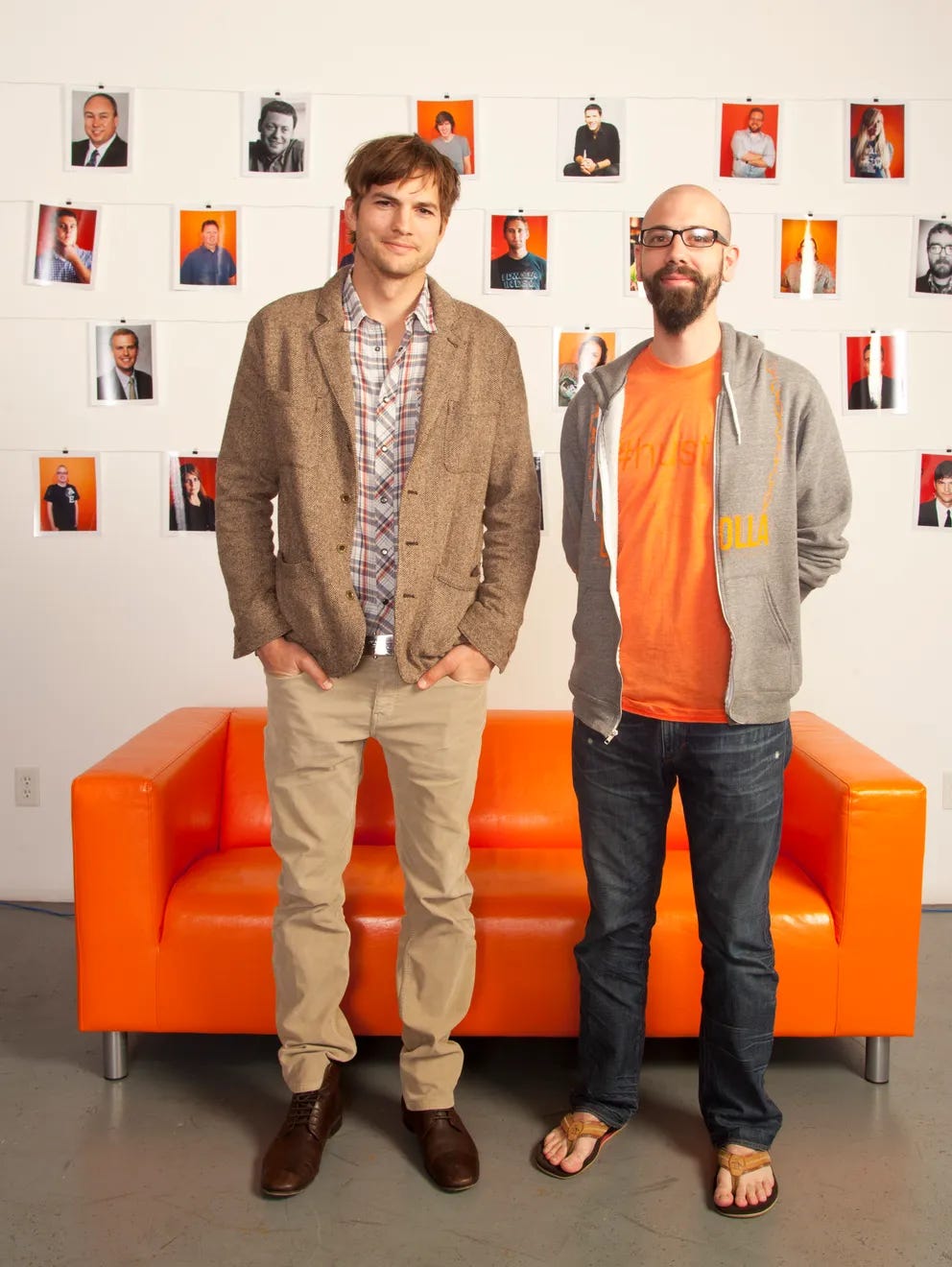
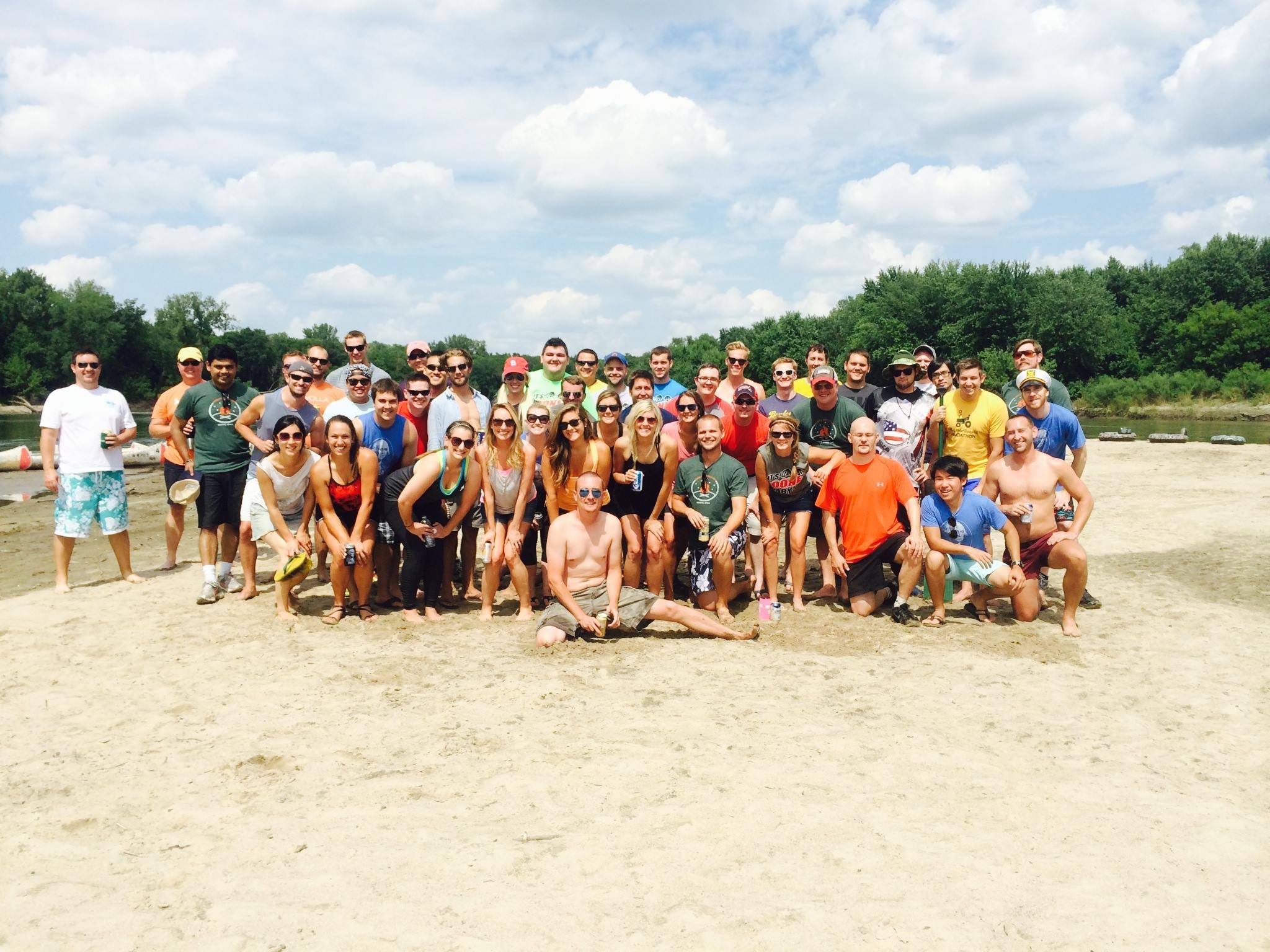
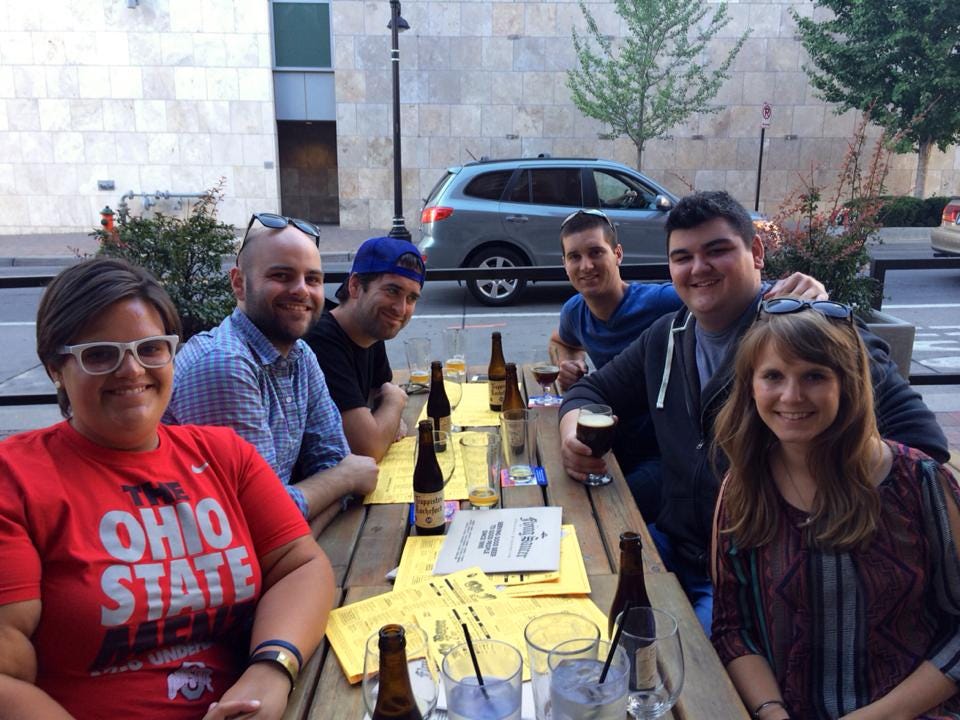

L to R: Dwolla investor Ashton Kutcher with founder Ben Milne, DSM Register; Team outing at Seven Oaks in Boone; Community builder team outing in Kansas City; The Dwolla Koala and an orange 1-year anniversary Moleskine.
When most startups fail, Dwolla didn’t.
I was only there for a small fraction of the 18-year company journey (2012-2015), when the founding leadership was moving fast to hit ambitious goals and proving that meaningful startups could be built far away from the coasts, in an often-overlooked place like Des Moines, Iowa!
Both national and local media loved this story, which is why Dwolla became the darling of the Iowa and Midwest startup community in the early years. Most everyday Iowans, often outsiders to the startup community, started to share pride for what could be built right here. This ‘signal of support’ alone is critically impactful to the entrepreneurs following in Dwolla’s footsteps today.
Outside the news headlines, every day there was a group of super smart people quietly trying to dominate payments-by-phone (before Venmo was acquired by Braintree/PayPal), move money safely in real-time, and lessen the credit card fee burden on small business merchants.
The model and product have changed since, now enterprise-facing, account-to-account (A2A) payments, but you can still find familiar faces from the early days of the product team staying on for its next chapter with NMI.
One constant over the years: Dwolla’s value, “We are never done,” has remained on the wall and on its website right up to this week’s acquisition. This mindset has powered the Dwolla team through many product and business model iterations, even during times that felt like starting over.
Shea Daniels, Engineering Manager at Dwolla:
“I joined Dwolla 12 years ago looking for a new adventure surrounded by a bunch of really smart people. I definitely got what I was looking for! Working at Dwolla has made me the engineer, the leader, and the advocate for culture that I am today…Turns out I like doing hard things. Change always brings opportunity. I’m looking forward to the next chapter of learning, building, and growing at NMI!”
One thing most people won’t see in the headlines
Dwolla’s outsized impact on the Iowa startup community comes from its alumni network, which has since gone on to start companies or work for the next breakout startup.
Some call this term “startup mafias”, popularized by the PayPal Mafia, or you can think of it as a startup’s diaspora.
Here’s my lens on the impact:
New companies started in Iowa by Dwolla alumni:
Brale
Hummingbirds
Workhound
Trility Consulting
Basis Theory
Companies and communities shaped by Dwolla alumni:
Agrisync
TractorZoom
BarnTools
Roboflow
Coviance
Fastpath Solutions
Carrot Fertility
Vertex
FarmlandFinder
ManchesterStory
Lean Techniques
HyVee
Clay & Milk
ISU Pappajohn Center for Entrepreneurship
Techstars Iowa
Monetery Conference
v-Sum
StartupCity Des Moines
Global Insurance Accelerator
ISU Pappajohn Center for Entrepreneurship
Greater Des Moines Partnership
Outside of Iowa, the list is much longer and not in any way exhaustive, including CloudFlare, Trello/Atlassian, Stripe, Amazon, Apple, IBM, Clipboard, Finex, Aeropay, gener8tor, and Mastercraft Ventures to name a few.
What did I miss? Share in the comments!
The right ingredients for a generation of builders
If you go beyond simply defining startup mafias, there were several important ingredients at Dwolla that uniquely positioned many team members for future success:
An early-stage environment with an unusually high level of ownership among its team members
Deep exposure to risk dynamics and the fintech industry
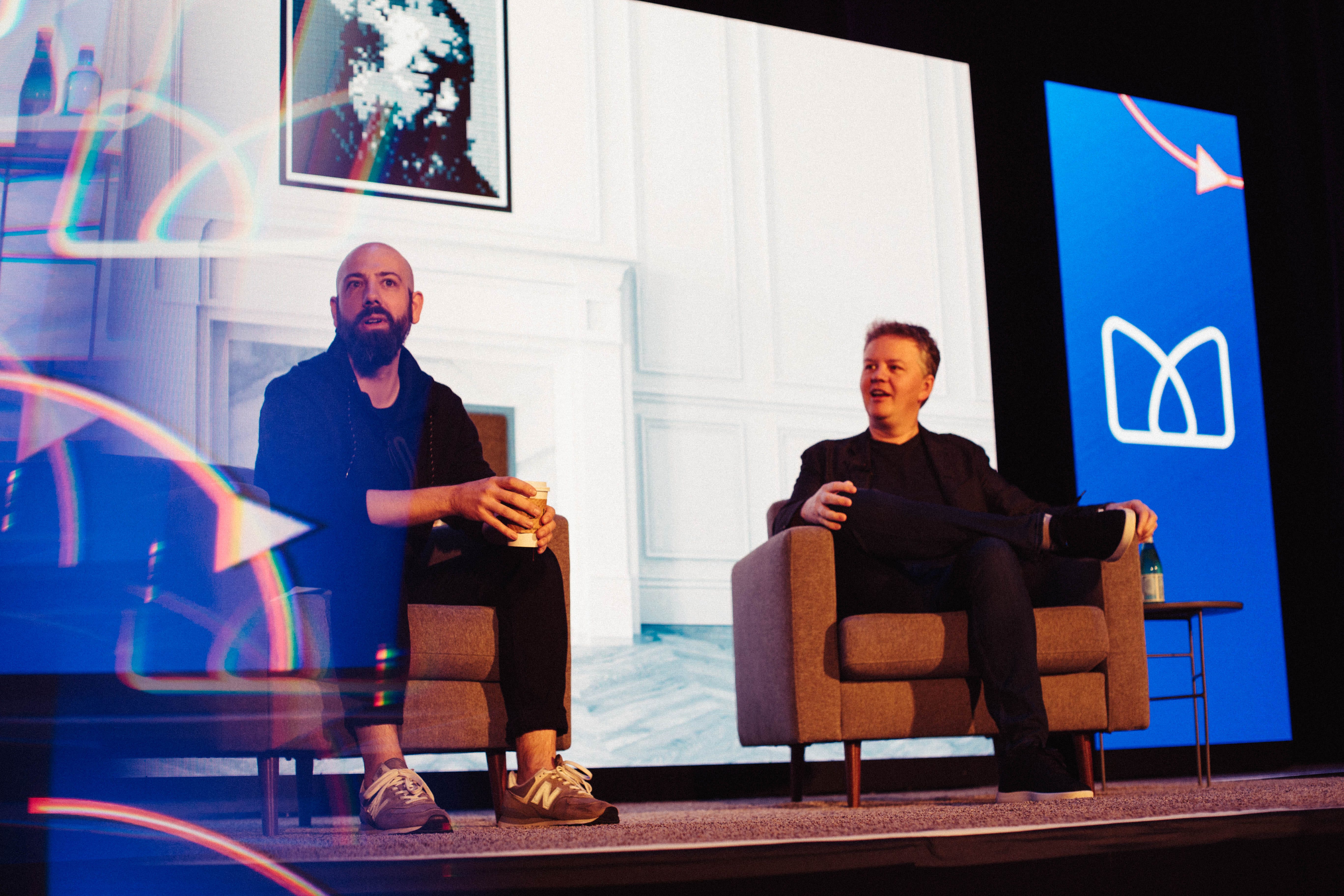
Ben Milne, founder of Dwolla:
“For many of us, I imagine Dwolla was a risk apprenticeship in this context. It selected for people willing to work on hard, non-obvious infrastructure, then gave us all years of reps inside high-consequence systems.
A lot of startups take product risk: will users want this?
Dwolla took product risk, regulatory risk, bank-partnership risk, developer-platform risk, geographic risk, and investor-access risk simultaneously. It was what needed to happen to make it all work, and people who can pull things like that off can do just about anything they set their mind to.”
A culture that forged friendships and resilience—the phrase “building in the trenches” was well lived, teaching team members how to navigate ambiguity, solve problems but not alone, and evolve quickly as the company would change
Those conditions don’t just create employees with experience — they create operators who were prepared to go build, lead, and invest elsewhere afterward. Pair that with the
“It’s hard to overstate how proud I am of Dwolla alumni.” Ben Milne
💡 How do you create longstanding entrepreneurial communities?
Bet on the people building startups and creating the space for the next outsized impact right now.
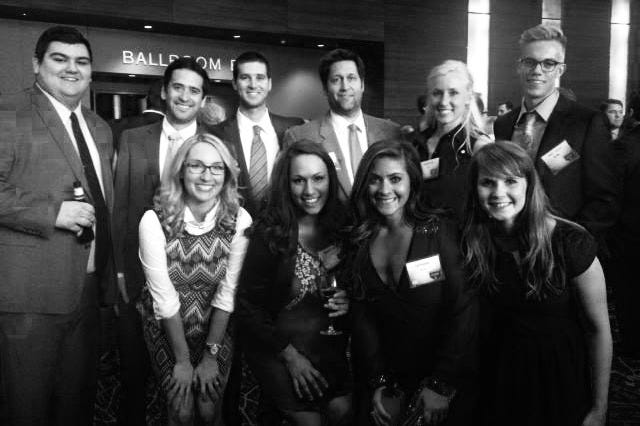
Dwolla became more than a startup-it became a proving ground that produced founders, community builders, investors, and operators who carried those lessons into the next generation of great companies and communities.
Hat’s off to everyone at Dwolla from both the early days to today who have built it and saw its success through to the next chapter at NMI. It was a defining part of my early career that made me who I am, and it’s why I choose to be around those who are “never done” and aren’t afraid of a good challenge.
If you want any reason to join a startup, I think Kate Lidgett Wagner’s article sums it up (p.s., she is hiring): Startups Will Break You. And That’s Why You Should Join One.
Please visit Diana’s Substack and subscribe here
These are such important stories that Tej and Diana are sharing. They are compact histories that should be widely shared, curated, and celebrated. So many lessons here...
Thank you , Diana!